Español
 Français
Foam pump bottles have revolutionized personal care routines, transforming liquid cleansers into velvety lathers with a single press. From luxurious hand soaps to high-end facial cleansers, this ingenious dispensing system combines fluid dynamics, material engineering, and chemistry to deliver an elevated user experience.
1. The Anatomy of a Foam Pump: Precision Engineering
A foam pump operates through a meticulously designed assembly of components:
Dual-chamber system: Separates liquid concentrate and air intake paths.
Mixing chamber: Where liquid and air collide under controlled turbulence.
Mesh screen/filter: A micron-level grid critical for foam structuring.
Check valves: Ensure unidirectional flow to prevent backflow.
Unlike standard pumps that simply dispense liquids, foam pumps integrate Bernoulli's principle. When the actuator is pressed, the rapid flow of liquid through a narrow orifice creates a pressure differential, drawing air into the mixing chamber through dedicated intake vents. This air-liquid ratio (typically 10:1 to 20:1) is calibrated to optimize foam density.
2. The Physics of Foam Formation: Turbulence and Surface Tension
Foam generation relies on two key physical processes:
Mechanical Shear: The liquid-air mixture undergoes violent turbulence in the mixing chamber, breaking surface tension barriers.
Micronization: The mesh screen (usually 100-200 microns) acts as a homogenizer, slicing the mixture into uniform microbubbles.
Surfactants in the formula play a supporting role by stabilizing the foam. Their amphiphilic molecules align at air-water interfaces, lowering surface tension and preventing bubble coalescence. This synergy between hardware and chemistry explains why foam pumps outperform manual lathering—each bubble is consistently sized (50-150 μm) for optimal texture and cleaning efficiency.
3. Technical Advantages: Beyond Aesthetic Appeal
The engineering behind foam pumps delivers measurable benefits:
90% dilution efficiency: Pre-mixed foam requires no manual water addition, reducing product waste by up to 40%.
Enhanced hygiene: Eliminates cross-contamination risks from repeated bottle contact.
Controlled dosing: Each pump delivers 0.8-1.2 mL of liquid concentrate, standardized to ISO 9001-compliant manufacturing tolerances.
Clinical studies demonstrate that foam formulations achieve 23% higher active ingredient deposition compared to traditional liquids, making them preferred for medical sanitizers and cosmeceuticals.
4. Sustainability Meets Innovation
Modern foam pumps incorporate eco-conscious advancements:
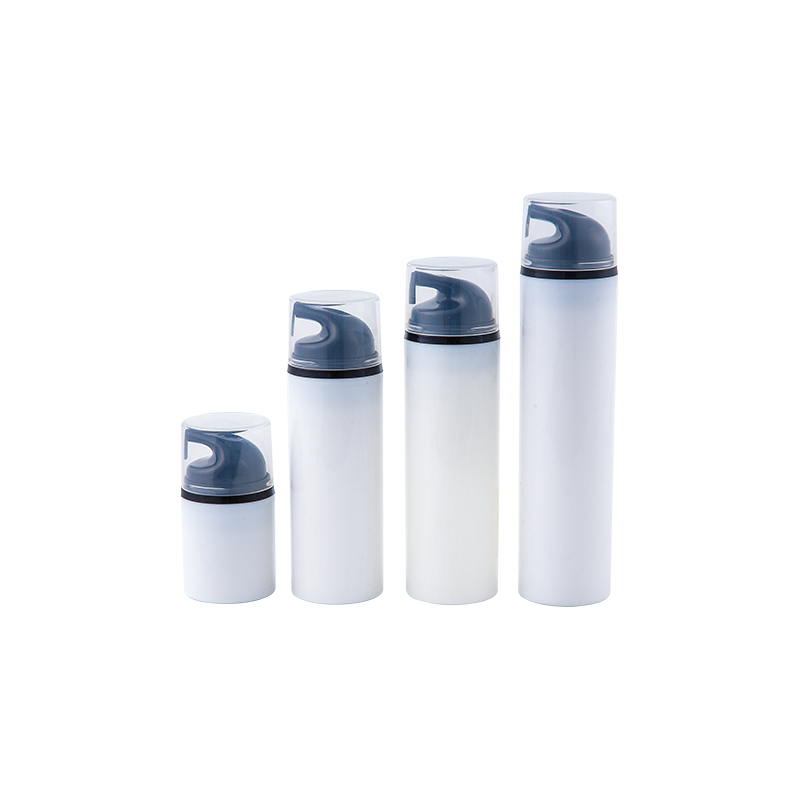
Airless technology: Prevents oxidation, extending product shelf life by 30%.
Recyclable PP/PE components: Meet EU Single-Use Plastics Directive standards.
Low-energy dispensing: Requires only 2.5-3.5 N of force, reducing material fatigue and leakage risks.
Industry leaders like Aptar and Silgan now offer carbon-neutral pumps, aligning with global ESG goals while maintaining <0.1% failure rates in accelerated lifespan testing.
Foam pumps exemplify how intelligent design bridges functionality and sensory pleasure. By mastering the interplay of fluid mechanics and colloidal science, these devices elevate everyday rituals into moments of indulgence—all while advancing sustainability agendas. As R&D focuses on biodegradable membranes and AI-optimized viscosity adaptation, the humble foam pump continues to redefine expectations in personal care and beyond.

.png "Cream bottle with transparent cap")